

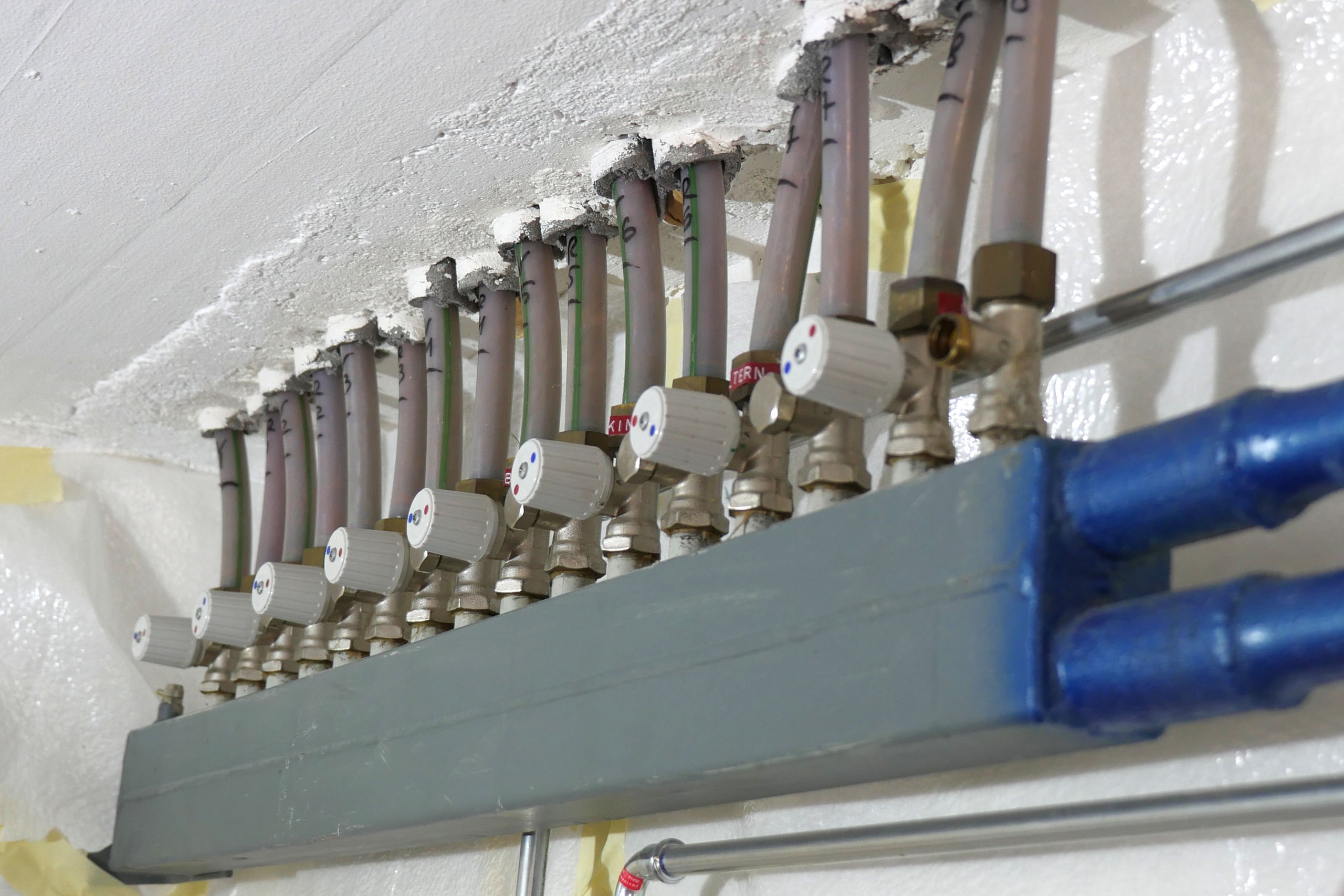
Is my old underfloor heating compatible with a heat pump?

Yes, underfloor heating is often a very good basis for a heat pump. Surface heating systems distribute heat over a large area and can therefore be operated at comparatively low flow temperatures. This is exactly what an efficient heat pump system should be designed for. However, whether an existing system is actually suitable does not depend on its age alone. The condition, design and interaction of the entire heating system are decisive.
Before the heating system is replaced, both the building's heat demand and the existing heat distribution should therefore be checked. With older underfloor heating, an expert condition analysis clarifies whether the heating circuits are sufficiently free-flowing, leak-tight and functional, or whether measures are needed beforehand.
Why low flow temperatures matter
A heat pump raises ambient heat from the air, ground or water to the temperature level the building requires. The smaller this temperature lift, the more favourable the operating conditions are in principle. Thanks to its large emitting surface, underfloor heating is often a good basis for low flow temperatures and therefore for the efficient operation of a heat pump.
SwissEnergy also explains that electrically driven heat pumps typically combine 20 to 35 per cent drive electricity and 65 to 80 per cent ambient heat to produce useful energy. These figures describe the system and are not a promise of efficiency or costs for any individual building.
When the existing underfloor heating should be checked first
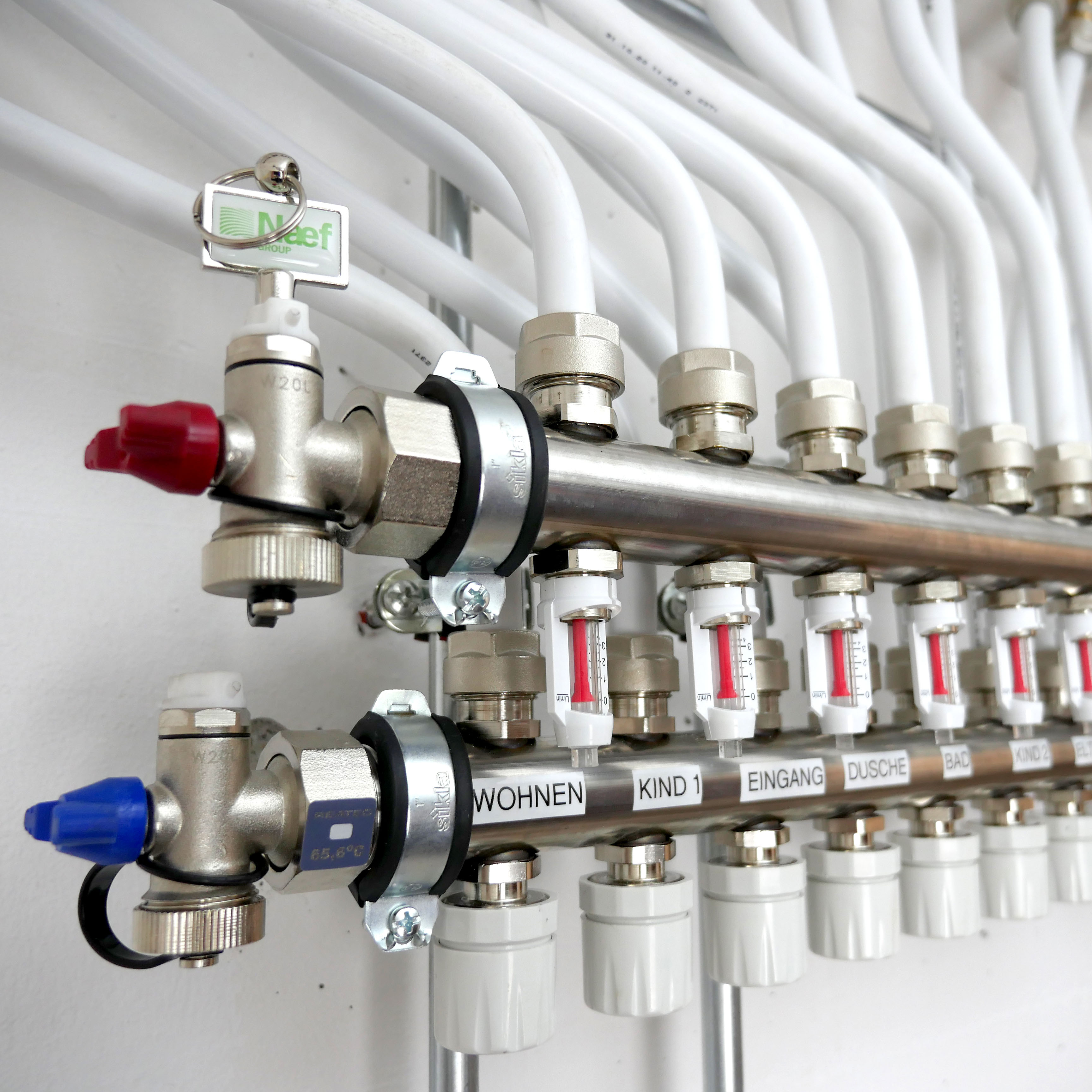
In older plastic pipes, embrittlement, oxygen ingress, corrosion of metal parts and deposits can impair the heat distribution. Possible consequences include declining heating output, zones that no longer get properly warm, operation at a higher flow temperature, recurring pressure loss or heating water that constantly needs topping up.
Such symptoms do not automatically mean that the underfloor heating needs renovating. However, they are a good reason for a condition analysis. The inspection provides a reliable basis for deciding whether no immediate measure is needed, whether servicing or cleaning by polishing is sufficient, or whether a complete internal pipe renovation makes sense. Only if the pipes can no longer be renovated do we consider the milling technique as a last resort.
The right sequence when replacing your heating
Have the building and its heat demand assessed by a qualified heating specialist.
If the existing underfloor heating and heating circuits are old or show irregularities, have them professionally inspected.
Coordinate any necessary work on the heat distribution with the planning of the heat pump.
Have the heat pump and heat emission system sized as an overall system and professionally installed.
Balance the system hydronically and optimise the settings under real operating conditions.
We assess and renovate the existing underfloor heating. Planning, permits and installation of the heat pump are the responsibility of qualified heating and planning specialists. The interfaces should be agreed jointly before the order is placed.
Does a heat pump also work in an older building?
Yes, an older building is not automatically unsuitable. SwissEnergy states that many older houses that have not been comprehensively renovated can also be heated efficiently with a heat pump, with some adjustments. Decisive factors include the heat demand, the building envelope, the heat emission system, the achievable flow temperature and professional sizing.
Existing underfloor heating is generally an advantage here. However, it does not replace an inspection of the building and the system. Depending on the findings, improvements to the envelope, the controls or the heat distribution may make sense.
What happens if the distribution is sludged up or uneven?
If individual heating circuits have too little flow or emit heat unevenly, the overall system cannot work optimally. The required flow temperature may then rise, while individual rooms still remain cool. A heat pump should therefore not be considered in isolation: generation, distribution and control must work together.
How much a specific fault affects electricity consumption cannot be quantified reliably without measurements and system data. That is why we deliberately do not state flat percentages or make promises of savings.
When internal pipe renovation is an option
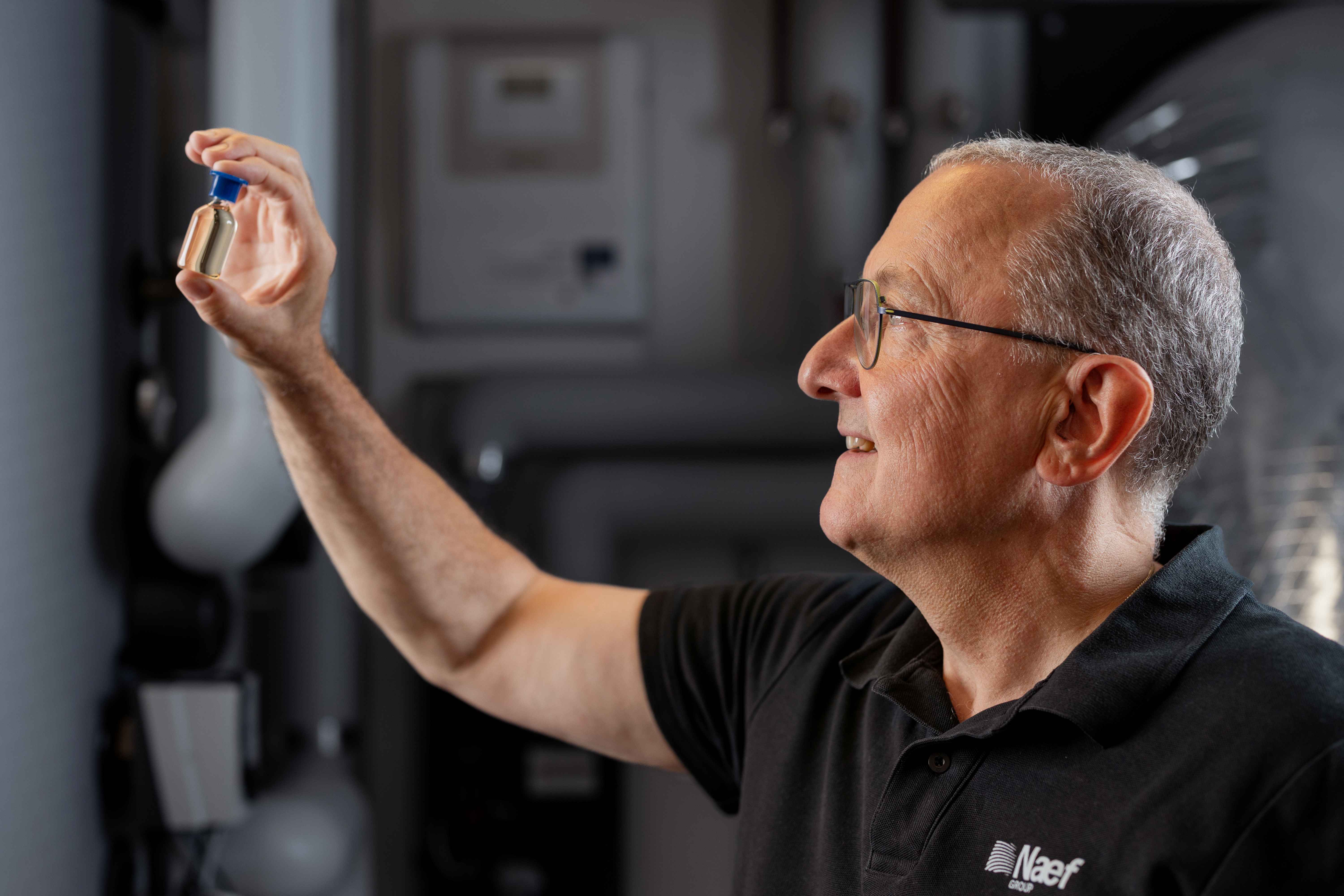
If the condition analysis shows that old plastic underfloor heating needs renovating and is technically suitable for it, we clean and coat the existing pipes from the inside with our HAT system. Floors and walls are not opened for this; local work at the manifold location is only necessary when a concealed (flush-mounted) manifold is replaced. For this, we set up a dust tent so that no dust gets into the house. The coating makes the pipes oxygen-tight in accordance with DIN 4726 again. The rooms remain habitable during the work.
We determine on the basis of the analysis whether renovation is possible and sensible, and which associated work on manifolds or controls is required. Internal pipe renovation is not a standard prerequisite for every heat pump, but a targeted measure where the findings call for it.
What is hydronic balancing?
With hydronic balancing, the water flow rates are set so that each heating circuit receives the heat it needs. This supports an even room temperature and helps to operate the system at the most suitable system temperatures possible. The specific adjustment should be coordinated between the specialists involved.
Putting advice and subsidies into perspective
SwissEnergy's «renewable heating» consultation (Impulsberatung) is a service of this federal programme and is carried out by approved specialists. It helps owners choose a renewable heat generator. It is free of charge if the subsidy conditions are met and the main heat generator is more than ten years old. It includes an on-site assessment and a recommendation with an initial cost estimate, as well as information on subsidies and possible tax deductions.
This consultation does not replace the technical condition analysis of old underfloor heating. The two assessments answer different questions and can usefully complement each other when preparing to replace a heating system.
Frequently asked questions
Next step
If you are planning a heat pump and do not know the condition of your existing underfloor heating, we will assess your situation in a free initial phone consultation. If a detailed inspection makes sense, this is followed by our on-site condition analysis, which can be carried out for a few hundred francs. The results can then be coordinated with the heating specialist responsible for the planning.