Turn every floor into a heater

Would you like energy-efficient, pleasant heat distribution in the house? Then it is time for underfloor heating. It is economical, emits pleasant radiant heat and ensures optimal hygiene. Thanks to our grinding technique, floor heating can be retrofitted in practically any room. Grinding underfloor heating even after it has been installed ensures that you have warm feet and the best energy efficiency to heat your rooms.

Benefits of underfloor heating
Underfloor heating leads to a better quality of life because it uses radiant heat to ensure that heating feels pleasant. Studies have shown that the optimal comfort temperature with underfloor heating is 1 °C to 2 °C lower than with other heating systems. And by lowering room temperatures by 1 °C, you are already reducing energy consumption by 5 % to 6 %.
Underfloor heating is a low-temperature heating system. With underfloor heating, the flow temperature is between 35°C and 40°C, which in turn saves energy and significantly reduces your operating costs. It therefore works optimally in combination with alternative energy sources such as heat pumps. Grinding floor heating even after heating has been installed is therefore worthwhile.
Underfloor heating is a low-temperature heating system. With underfloor heating, the flow temperature is between 35°C and 40°C, which in turn saves energy and significantly reduces your operating costs. It therefore works optimally in combination with alternative energy sources such as heat pumps. Grinding floor heating even after heating has been installed is therefore worthwhile.
Grinding underfloor heating after it has been laid, without a build-up layer
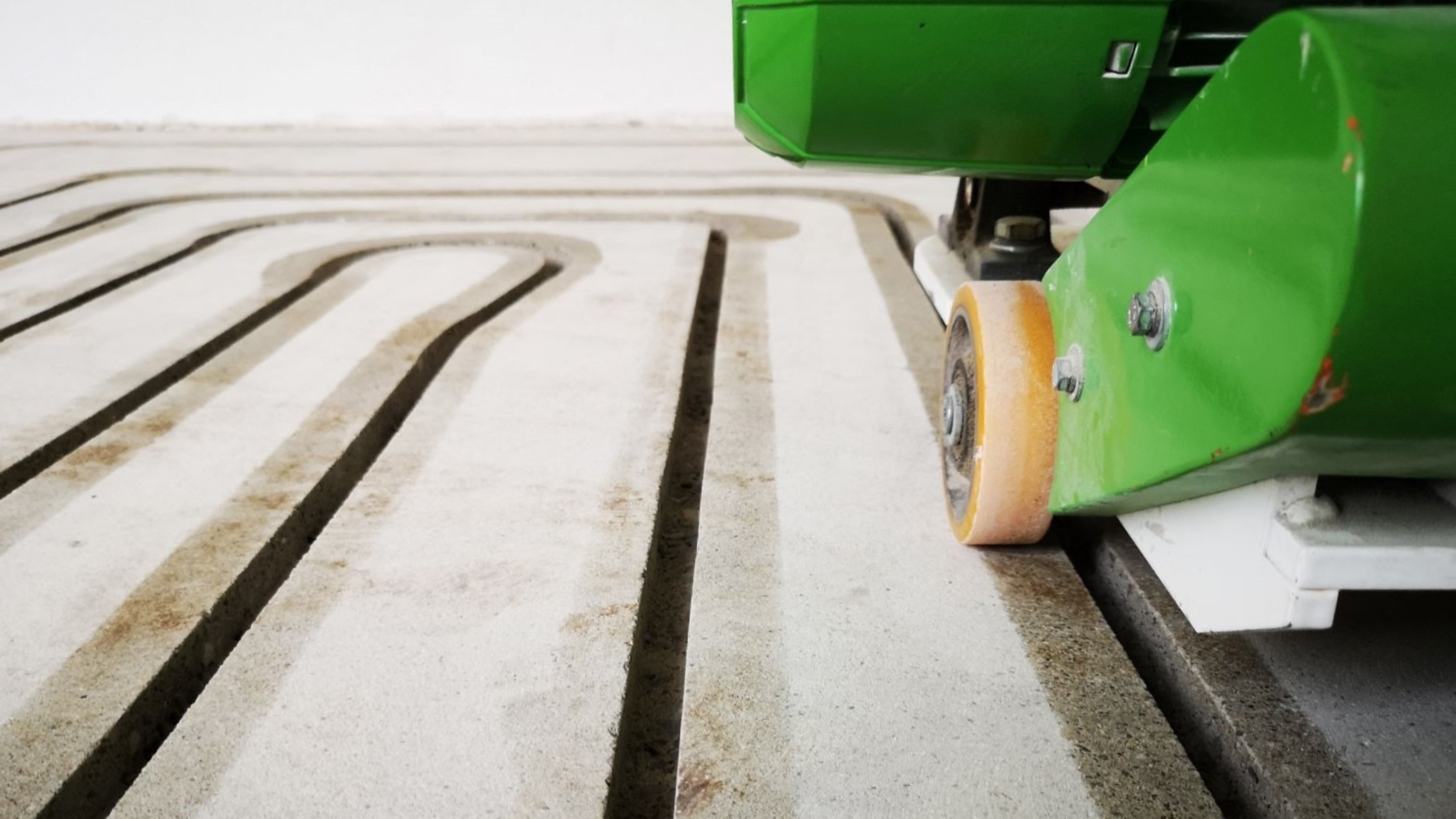
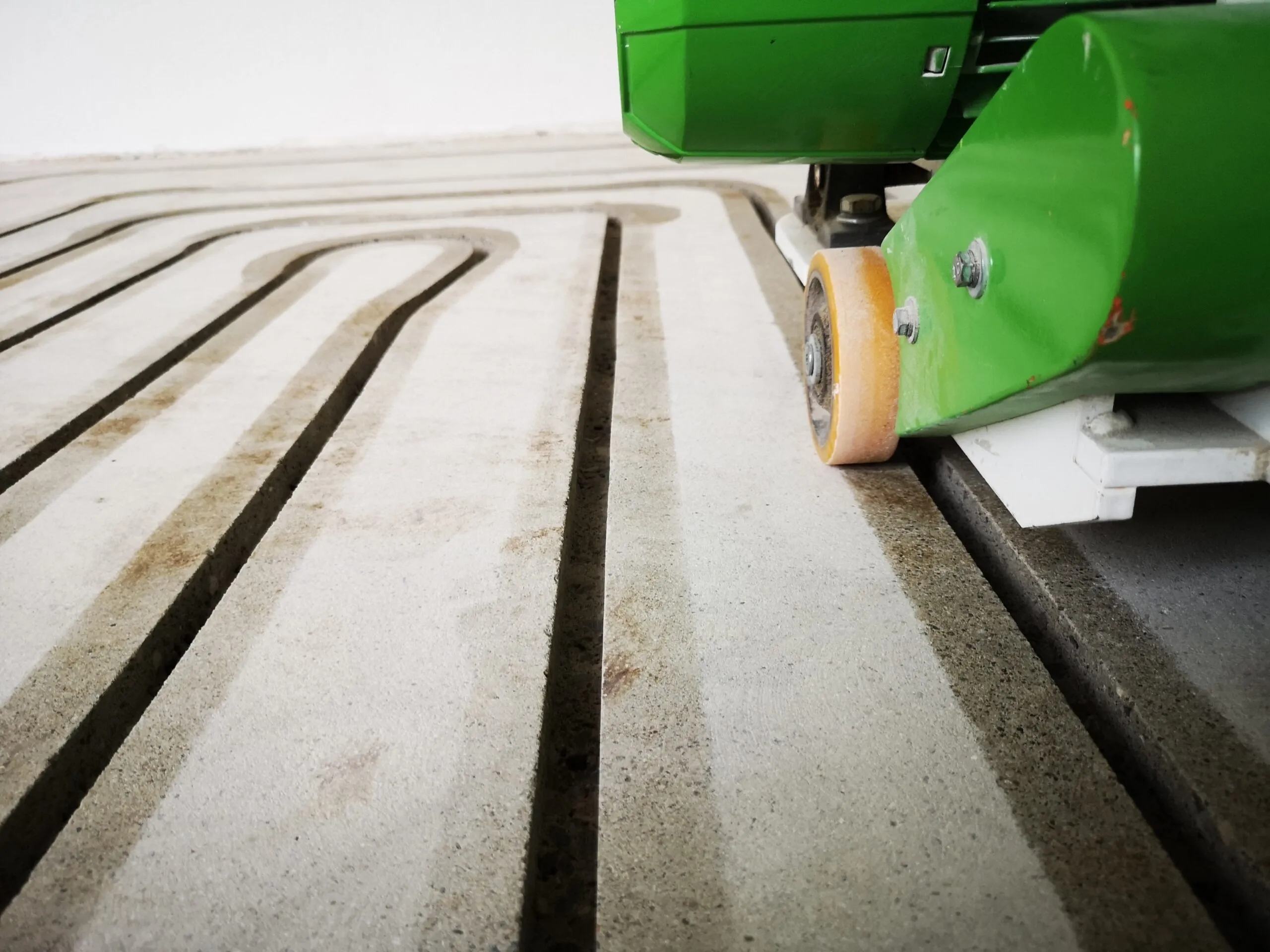
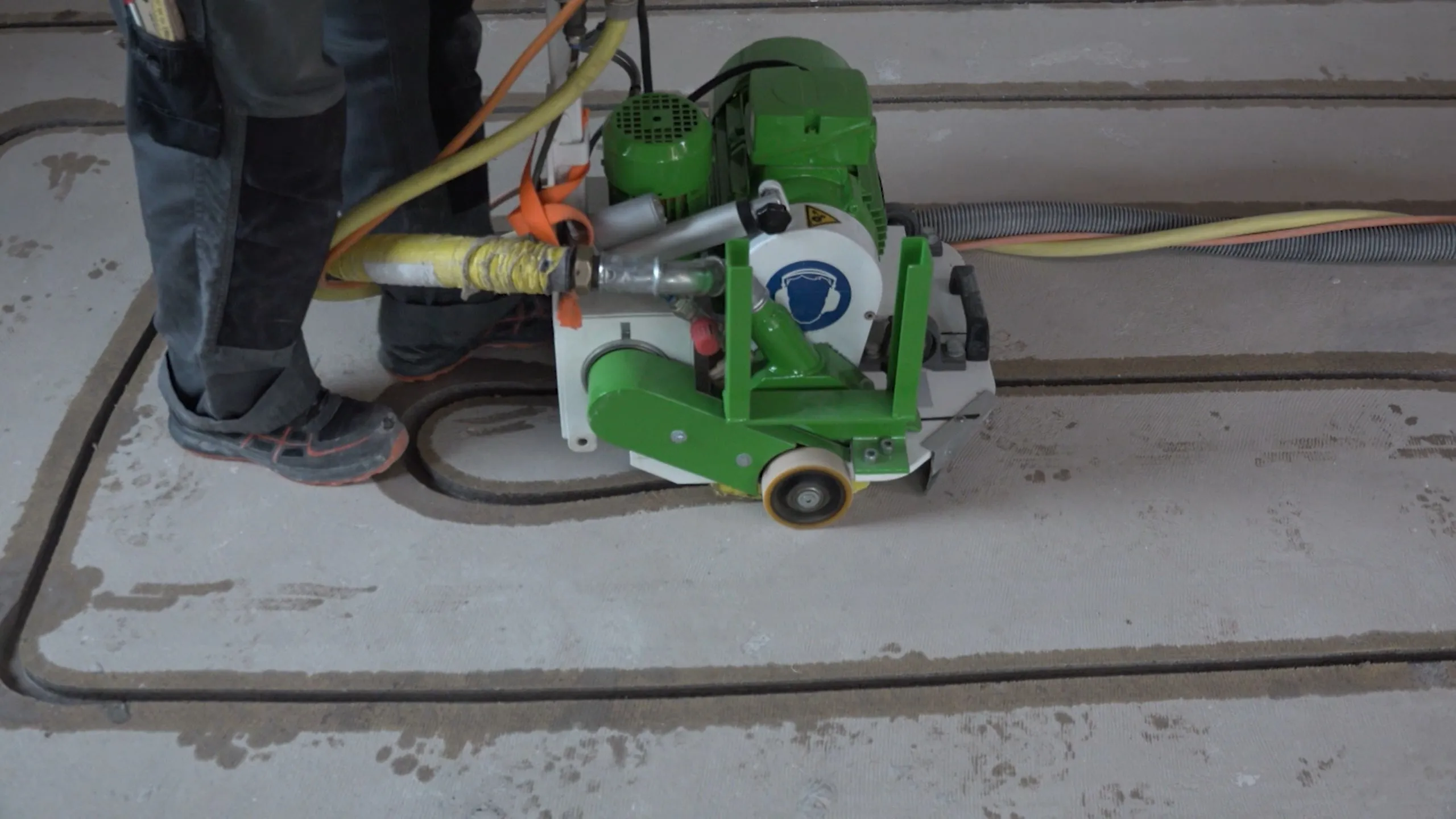
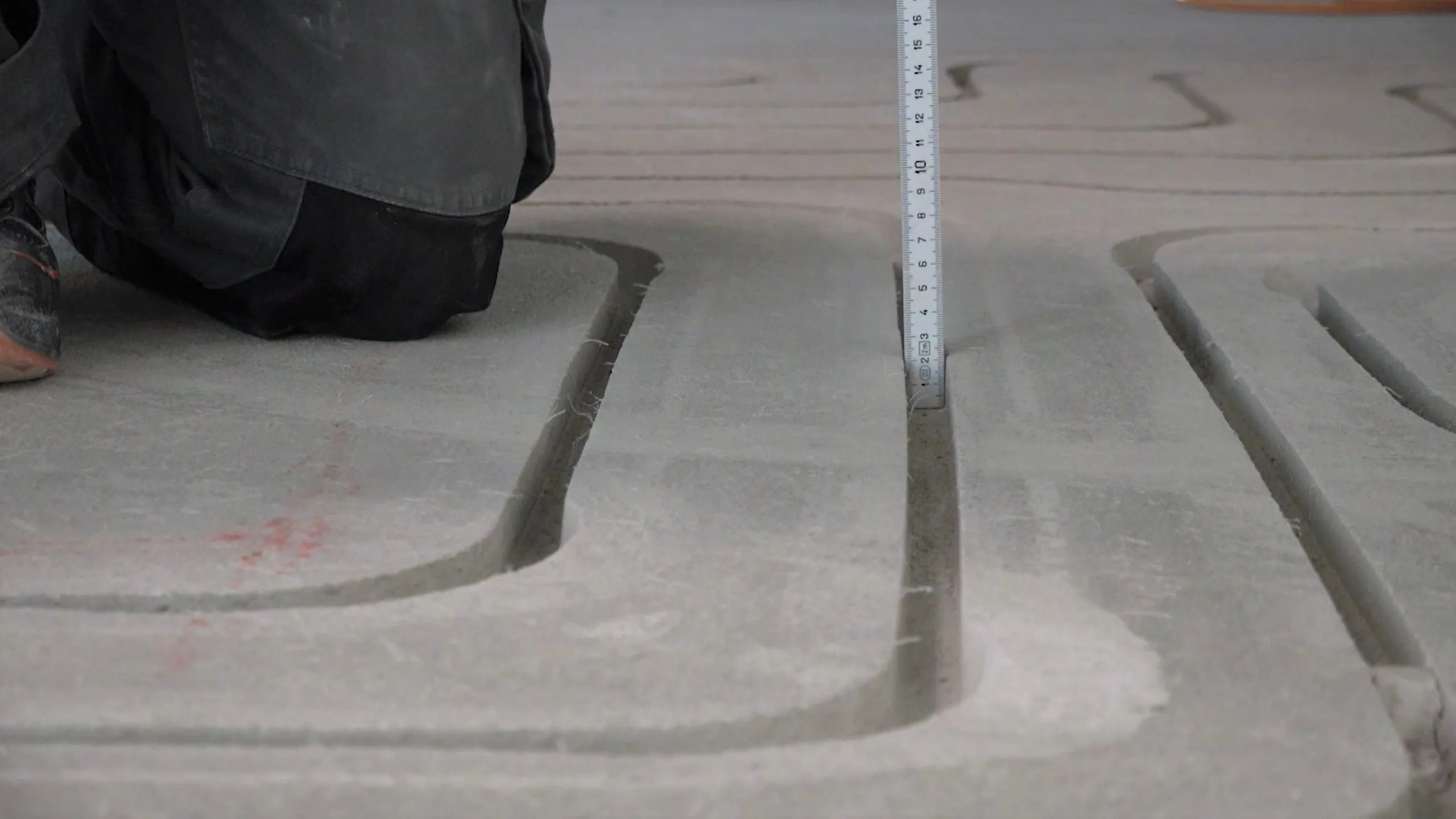
With our completely dust-free grinding technique, a sophisticated groove pattern is cut into the subfloor with a machine that is specially designed and patented for this purpose. New multi-layer composite pipes are then laid into the floor. Our prerequisite for this process is a five-centimetre-thick, cementitious floor. The room height will remain the same after installation, with design freedom even increasing thanks to the removal of radiators.
As the cutting process is carried out with the help of a multi-resistant industrial diamond, the technique can be used on almost all cementitious subfloors five centimetres and above in thickness. An additional build-up layer or the removal of the existing subfloor are therefore no longer necessary. Another advantage of an underfloor heating is that it is even more convenient and efficient to use. As the heating pipes are now directly under the floor covering, the temperature can be regulated more quickly and precisely than with conventional systems. This makes a significant difference in terms of energy consumption.
As the cutting process is carried out with the help of a multi-resistant industrial diamond, the technique can be used on almost all cementitious subfloors five centimetres and above in thickness. An additional build-up layer or the removal of the existing subfloor are therefore no longer necessary. Another advantage of an underfloor heating is that it is even more convenient and efficient to use. As the heating pipes are now directly under the floor covering, the temperature can be regulated more quickly and precisely than with conventional systems. This makes a significant difference in terms of energy consumption.

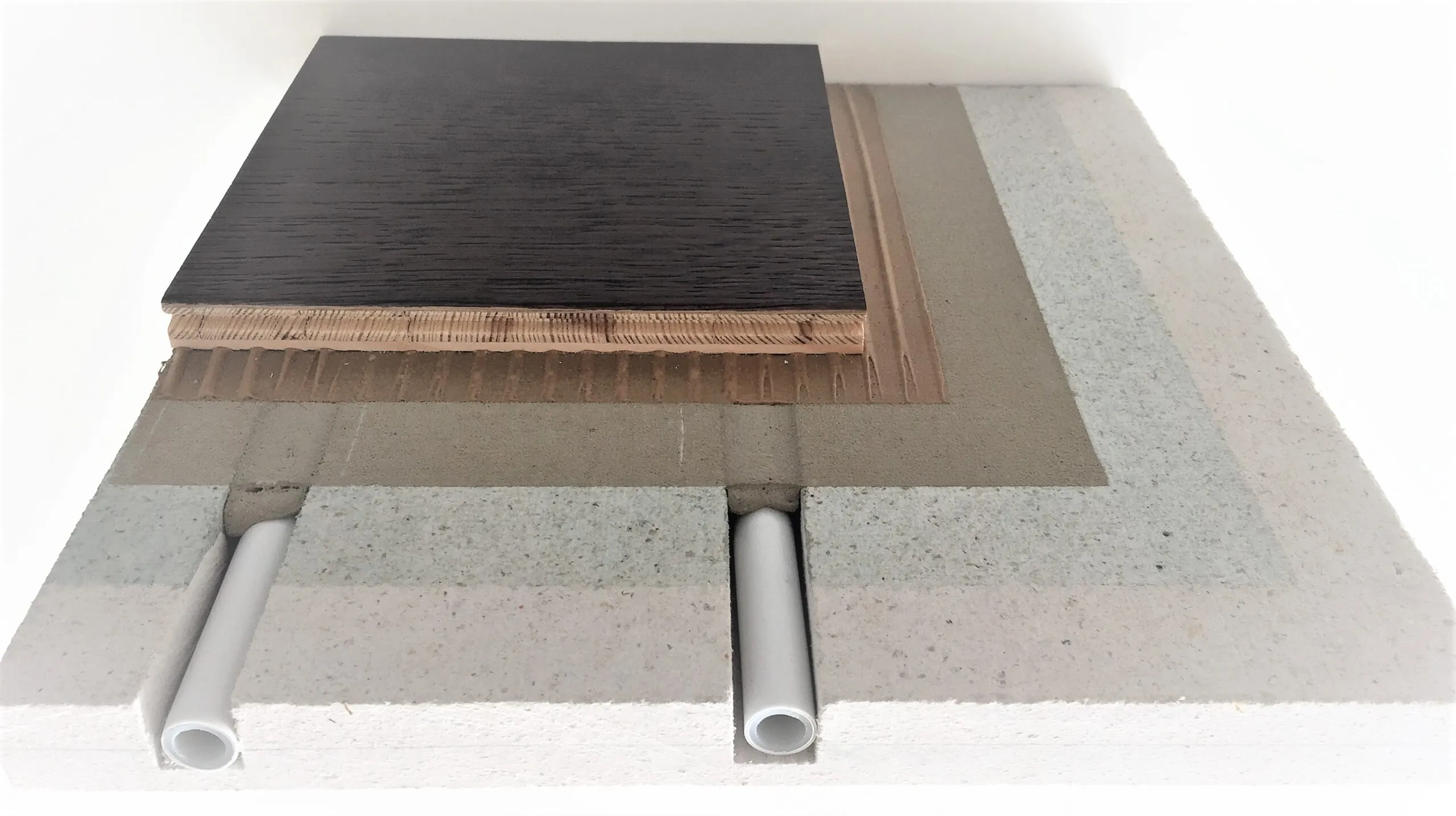
Retrofitting underfloor heating

Do you have questions?
The most frequently asked questions about milling for underfloor heating
Milling grooves for an underfloor heating system is an important decision for increasing the value of a property. To help you get oriented quickly, we have compiled the most frequently asked questions from our customers based on real-world experience. In addition, our glossary explains the most important technical terms related to milling technology in a clear and understandable way.
How thick does my subfloor have to be in order for underfloor heating to be milled in?
Can underfloor heating also be milled into a hard concrete floor?
How many days of renovation should I expect for a normal detached house?
Which underfloor heating pipes are used for installation?
What costs can be expected for such a renovation?
Do you also offer additional heating-related work (e.g. replacing manifolds or dismantling radiators)?
Can underfloor heating also be milled or installed in drywall elements (e.g. Fermacell or Rigidur)?
A consultation that makes all the difference
Ein Beratungsgespräch, das den Unterschied macht
Get started with no obligation and gain clarity
During a free initial telephone consultation, we’ll make time to speak with you about your individual needs. You don’t need to be an expert. Together, we’ll calmly review your situation and determine whether any action is required and if so, what this may be. We’ll explain everything clearly and answer any questions so that you feel confident and know the best way to proceed. Of course, there’s no obligation with this initial consultation.
Where appropriate, we’ll recommend a detailed on-site analysis. One of our specialists will visit the property in question and assess the condition of the relevant pipes. This will provide an accurate and reliable overview of your situation. This paid assessment will form the basis for all further decisions. At the same time, we’ll carefully check whether a renovation is actually necessary, ensuring you avoid any unnecessary work or costs.
During a free initial telephone consultation, we’ll make time to speak with you about your individual needs. You don’t need to be an expert. Together, we’ll calmly review your situation and determine whether any action is required and if so, what this may be. We’ll explain everything clearly and answer any questions so that you feel confident and know the best way to proceed. Of course, there’s no obligation with this initial consultation.
Where appropriate, we’ll recommend a detailed on-site analysis. One of our specialists will visit the property in question and assess the condition of the relevant pipes. This will provide an accurate and reliable overview of your situation. This paid assessment will form the basis for all further decisions. At the same time, we’ll carefully check whether a renovation is actually necessary, ensuring you avoid any unnecessary work or costs.